Eda Uzunlar ’23
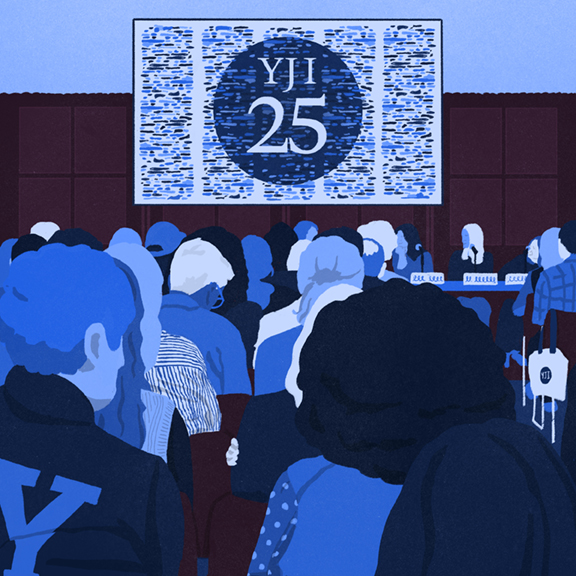
If the current media landscape is a raging hurricane, the recent gathering that marked the Yale Journalism Initiative’s 25th anniversary was the calm eye within the frenzy. Since 2001, YJI has offered practical and professional guidance, internship funding, and other support for students pursuing careers as journalists.
In late March, current students and alumni gathered for a day of discussion and a dinner reminiscent of a family reunion to commemorate the initiative that has helped create some of today’s journalism giants.
“What really reflects the program’s success, and what I am proudest of, is that so many of you are still dedicating yourself to this essential work at a time when it’s never been more important,” said YJI director and program alumna Haley Cohen Gilliland ’11 in her welcome remarks. “That is what we are here to celebrate.”
In panels covering polarization in political reporting (humility and curiosity are essential, said The Atlantic’s Elaina Plott Calabro ’15) and the editing process (fight to the death, quipped New York Times reporter Vivian Yee ’12), the concept of dedication served as a throughline. Many panelists cited their abilities as coming from their own mentors in the YJI, such as Steven Brill ’72, ’75JD, who founded the program with his wife, Cynthia Brill ’72.
“We had a lot that we owed Yale, and we wanted to figure out how we could give something back, but in a really meaningful way—not simply add on to the wealth that Yale has,” Brill said. “The goal of this program was actually how to get things done.”
Although the YJI is distinct in some ways from Yale’s liberal arts tradition through its practical education, the event’s speakers didn’t reflect the same wary, and at times, distraught sentiments that many journalists within the practice have shared in recent years. In part because the event was a celebration, and in part because of the padding of assuredness that comes with a connection to Yale, most of the day’s discussion took on a rose-tinted character.
But the final panel—standing-room only, despite the late hour—highlighted some of the most recent graduates. It was during their turn in front of the microphones that challenges to journalism like artificial intelligence and young audiences were brought directly into the conversation.
“None of my friends will pay for news,” shared Houston Chronicle and San Antonio Express-News reporter Isaac Yu ’24. He flipped the question to the positive, setting a goal for his generation: “But just because they don’t want to pay for news now, [it] doesn’t mean they never will. . . . Identifying those key points where you can funnel people in is both a serious challenge and an interesting question for us.”
Current YJI undergraduates took the spotlight at the dinner that capped off the event. Leaning across tables on eager elbows, students’ questions and comments were sharp, signaling an earnest hunger to tackle hurdles introduced earlier in the day. As the media landscape continues to evolve with increasing fury, the young journalists within the YJI have myriad tools in their belt, from their own budding practices to a lineage of alumni. Most notably, they have their dedication.
 loading


 Print
Print Email
Email