Beinecke Rare Book and Manuscript Library
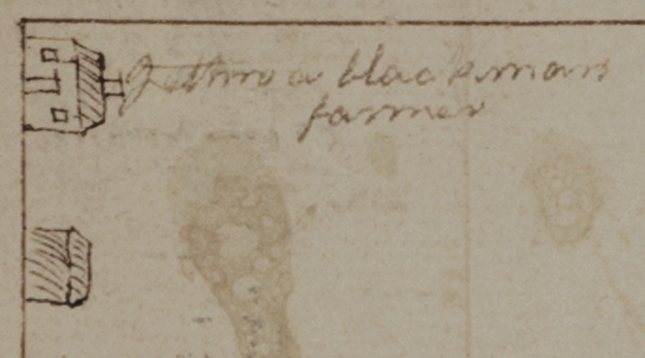
The mark that reads “Jethro, a black man farmer,” on the 1748 map of New Haven inspired city historian Michael Morand ’87, ’93MDiv, to dig into Jethro’s story.
View full image

Beinecke Rare Book and Manuscript Library
The mark that reads “Jethro, a black man farmer,” on the 1748 map of New Haven inspired city historian Michael Morand ’87, ’93MDiv, to dig into Jethro’s story.
View full image
Beinecke Rare Book and Manuscript Library
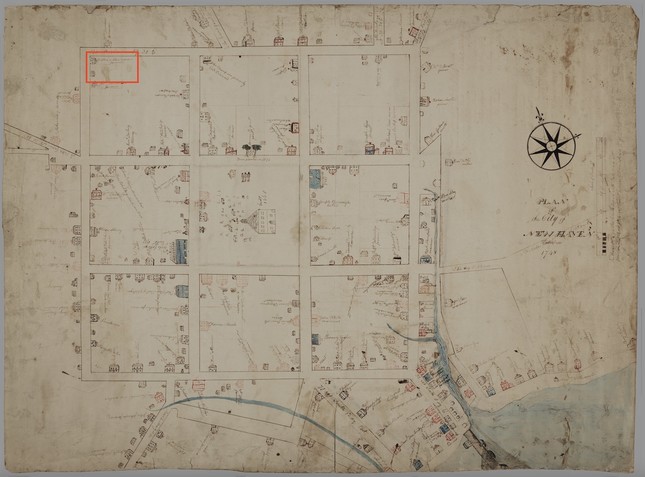
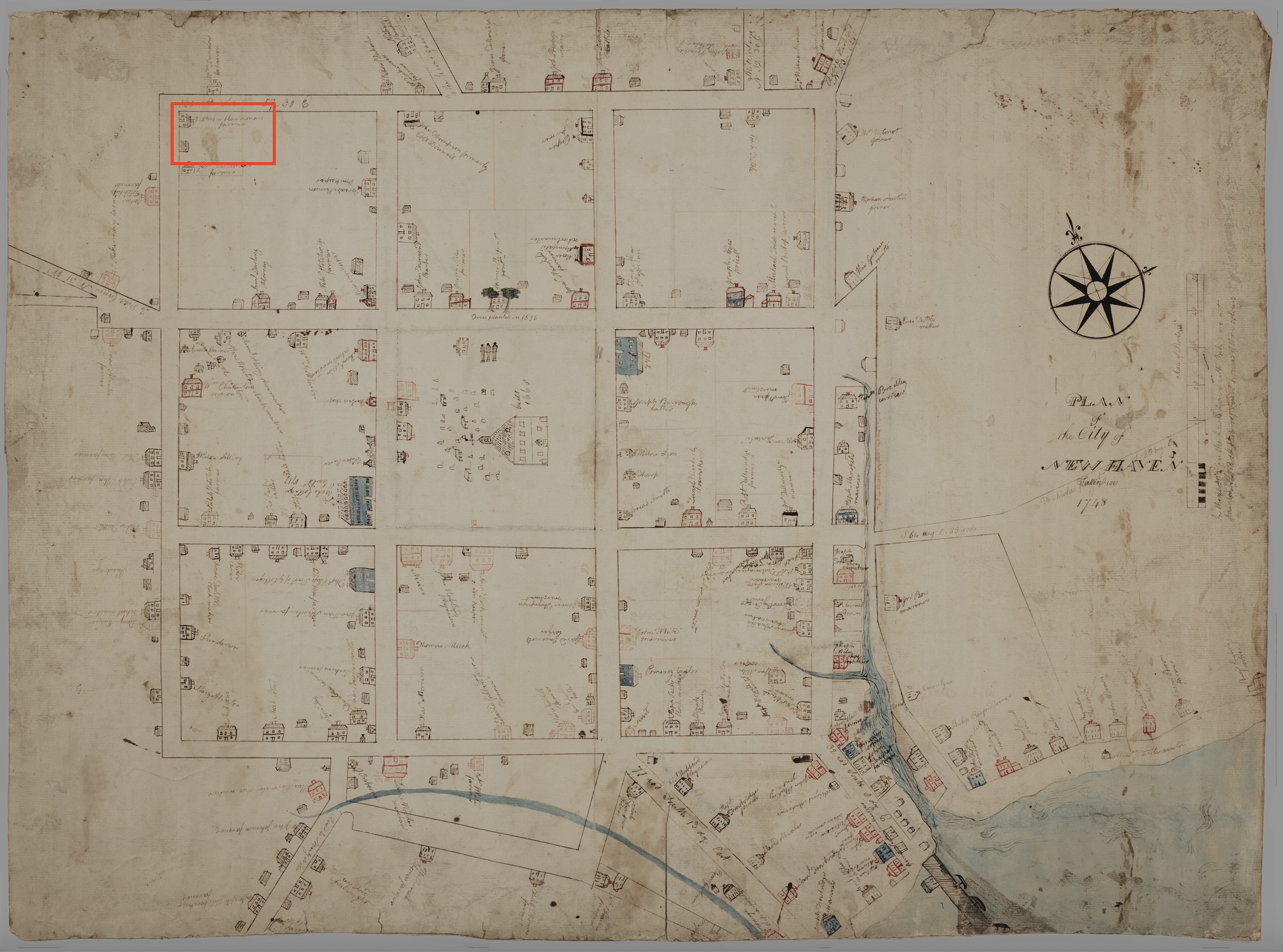
The map itself was created by Yale College senior James Wadsworth—Class of 1748 and a future major general in the Revolutionary War. The red box indicates the location of Jethro Luke's house.
View full image

Beinecke Rare Book and Manuscript Library
The map itself was created by Yale College senior James Wadsworth—Class of 1748 and a future major general in the Revolutionary War. The red box indicates the location of Jethro Luke's house.
View full image
This is a story about what has been kept, forgotten, and can be recovered.
It began for me in 2017 with a mark on a map of New Haven from 1748 made by James Wadsworth, a Yale College senior from nearby Durham. It tracks to Ashmun, Grove, and York Streets, now a small city park adjacent to Grove Street Cemetery.
Wadsworth apparently made the map for himself. He went on to serve as a major general in the state militia in the Revolutionary War and served as a state and national legislator and a New Haven and state judge. Wadsworth was noted for ruling in one of the first state cases establishing an enslaved person’s right to legal redress against a dishonest owner.
Later in life, Wadsworth gave the map to William Lyon. He arranged for engraver Thomas Kensett to use it for a map published in 1806. Lyon added information about the families that came in 1638 and were New Haven’s first European settlers, one of which he married into. It was Kensett’s first map in the United States and was republished many times. Perhaps Lyon or a descendant gave the original Wadsworth map to Yale.
The mark that struck me on the 1748 map reads: “Jethro, a black man farmer.” It is the only mark that has a first name without a surname. Surely he had a story, family, friends, and networks.
New Haven church records offer a start, including his full name. Jethro Luke was the 878th person admitted into membership in the founding church, the fourth Black member, and the only early Black member with a surname. He likely was born in the early 1700s. His death is noted as 1760 or 1761. The fifth Black member, Ruth, made a home with him.
Jethro and Ruth Luke were human property, enslaved to Mary Pierpont and manumitted on her death in 1740. She was a granddaughter of Thomas Hooker, chief founder of Connecticut, and the widow of James Pierpont, minister of the church in New Haven and the founding trustee of Yale who secured its charter. Their daughter, Sarah, married Jonathan Edwards at the family home on Elm Street in 1727.
The home was at present day 149 Elm Street. New Haven’s first two elm trees, shown on the map, were planted there in 1686. The first Pierpont home, where Jethro and Ruth Luke lived, enslaved, until 1740, was built for James Pierpont in 1685 and stood until 1767, when Pierpont’s grandson John built his home there. It is now the Yale Visitor Center.
The 1745 grand list values Jethro Luke’s home at 18 pounds. He was likely New Haven’s first Black property owner. His probate documents in 1761 show he owned three pieces of property. He had a variety of clothes and household goods, equipment for farming, a horse, two oxen, and a Bible. Luke’s largest creditor was Thomas Clap, Yale president from 1740 to 1766. Historian Brooks Mather Kelley noted that Clap “codified [Yale’s] laws and recorded its customs, increased its physical plant, created its first professorship, established its church, and improved it intellectually.”
Jethro Luke and his son Gad did much work for the college and its president. They did substantial work on Connecticut Hall, which played a part in Yale becoming the nation’s biggest college for many decades. Gad’s freedom was earned during the project, with his freedom purchased by his father. The records note five other enslaved Black men worked on the project. Black people made up only 3 percent of New Haven’s population, but Black labor accounted for more than 25 percent of Connecticut Hall construction.
The silence about Black people has been inverse to the ubiquity of their presence in colonial Connecticut, New Haven, and Yale. Most presidents and trustees in Yale’s first century were enslavers. Eight of the ten founding trustees were enslavers.
Catherine Brekus ’93PhD, professor of the history of religion in America at Harvard University, said of Jethro Luke in 2021: “Jethro was the father-in-law of Moses, who had led the enslaved Israelites to freedom, and Luke was the apostle who felt called, in the words of the King James Version, ‘to preach deliverance to the captives.’ In New Haven, Jethro and his wife chose to name their son Gad, a reference to the tribe of Israel who had crossed the Red Sea to freedom, and who, according to a verse in Genesis, ‘shall overcome at the last.’”
The absence of the stories of enslaved and free Black people in Connecticut, New Haven, and Yale history has at long last begun to change. The 1748 Wadsworth map always had a mark to help us begin to see Jethro Luke and his stories.
 loading


 1 comment
 Print
Print Email
Email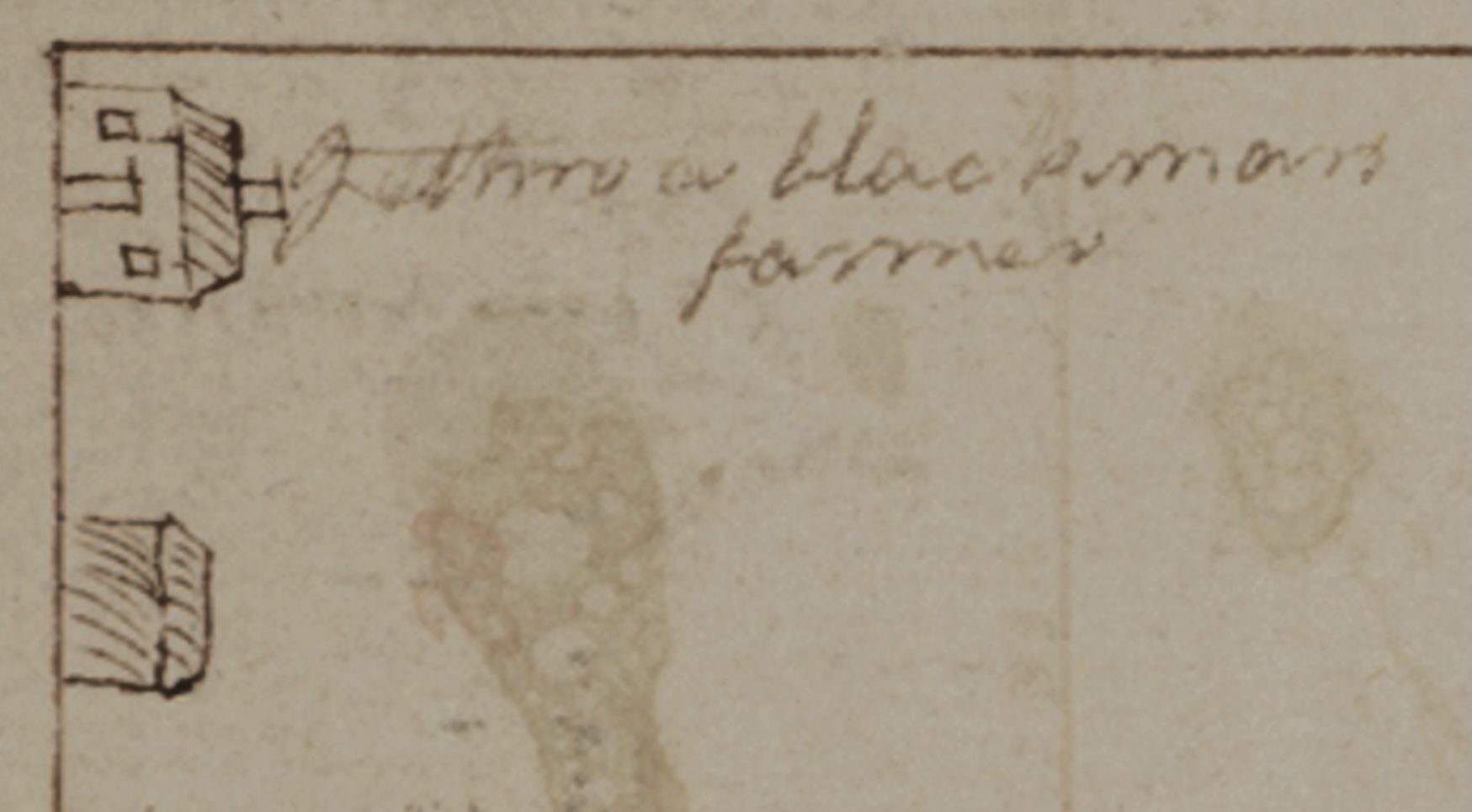
1 comment
-

Carolyn Mullen, 7:31am March 21 2026 |  Flag as inappropriate
The comment period has expired.Thank you for bringing this important piece of history to light. And for giving Jethro Luke back his full identity.